Spring’s Sweet Work: Inside the World of Bees
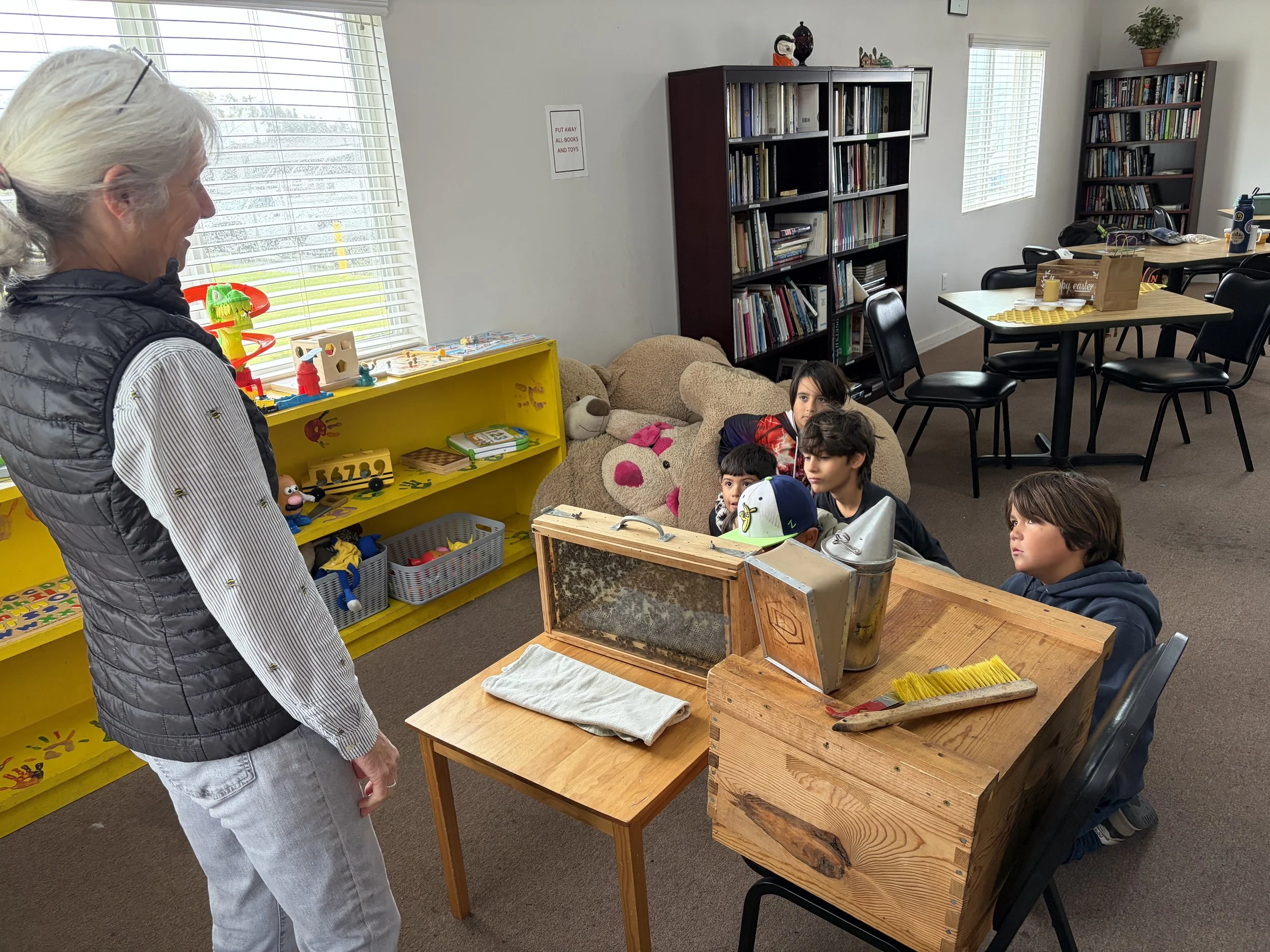
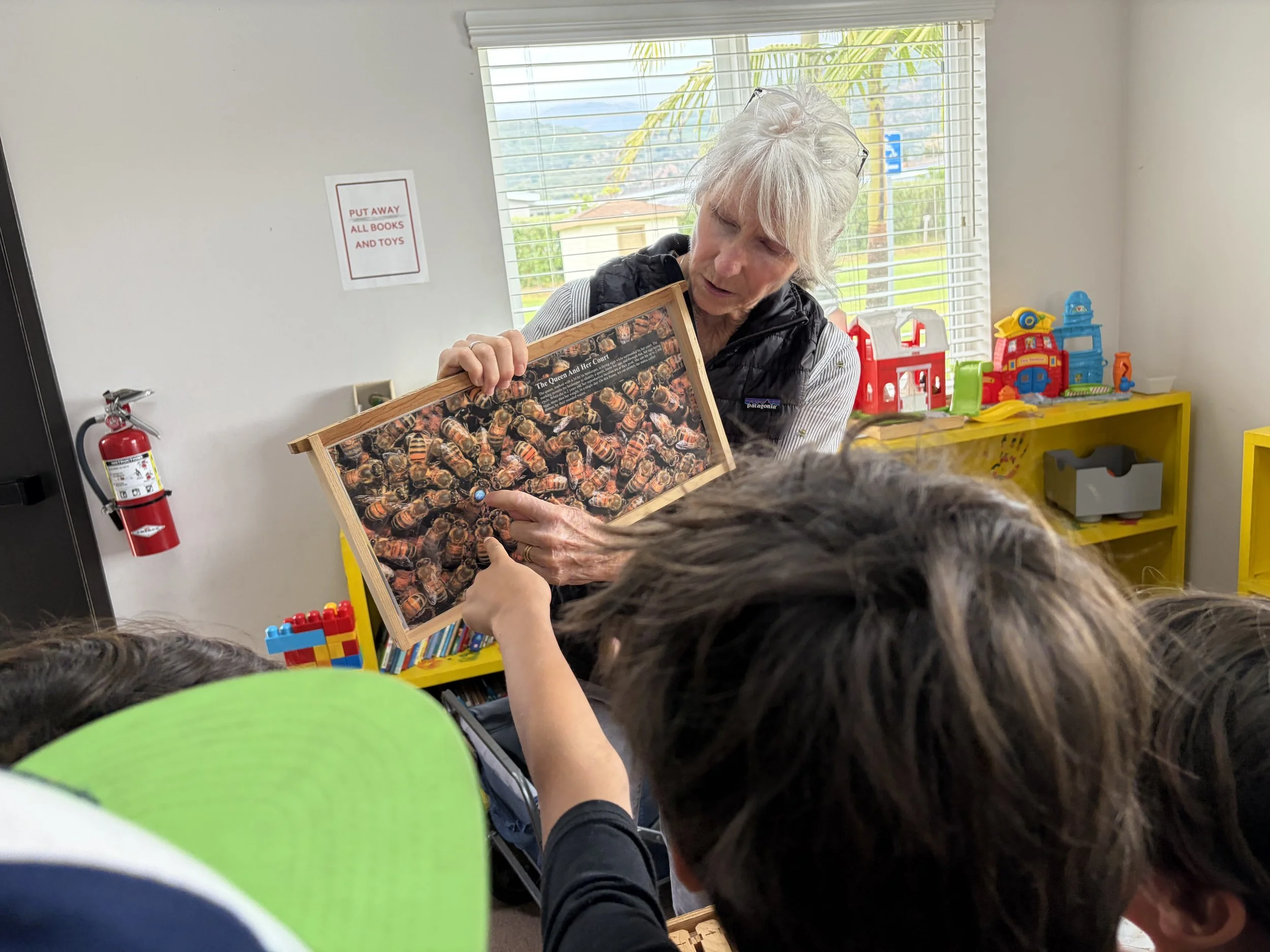
On Tuesday, April 21, Campus Earth Learning Cooperative welcomed a very special guest, Barbara Hughes, beekeeper and Master Gardener from the The Beekeepers Guild of Santa Barbara. She brought with her something truly unforgettable, a live observation hive, giving our learners a rare opportunity to see honeybees up close and in action.
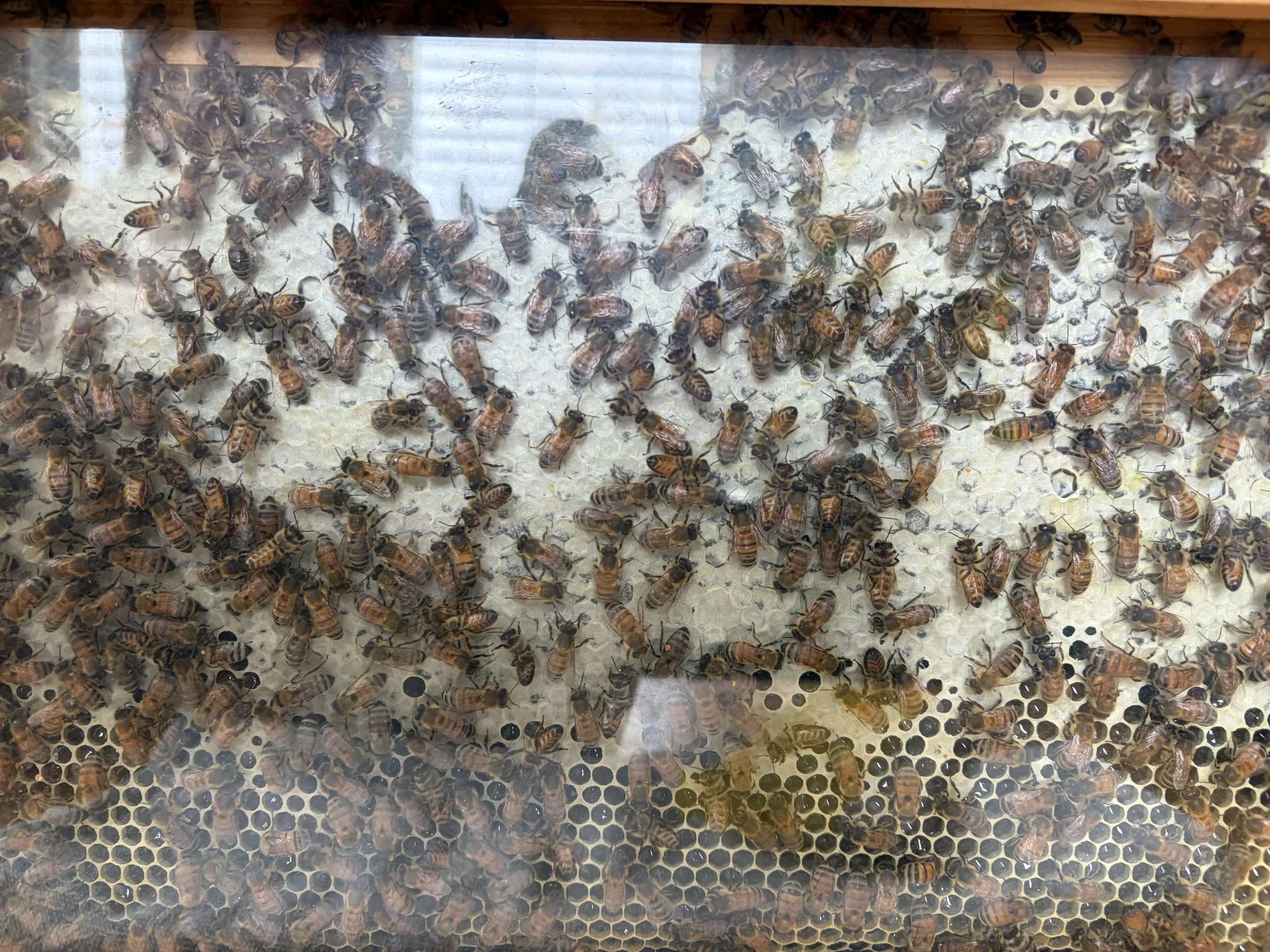
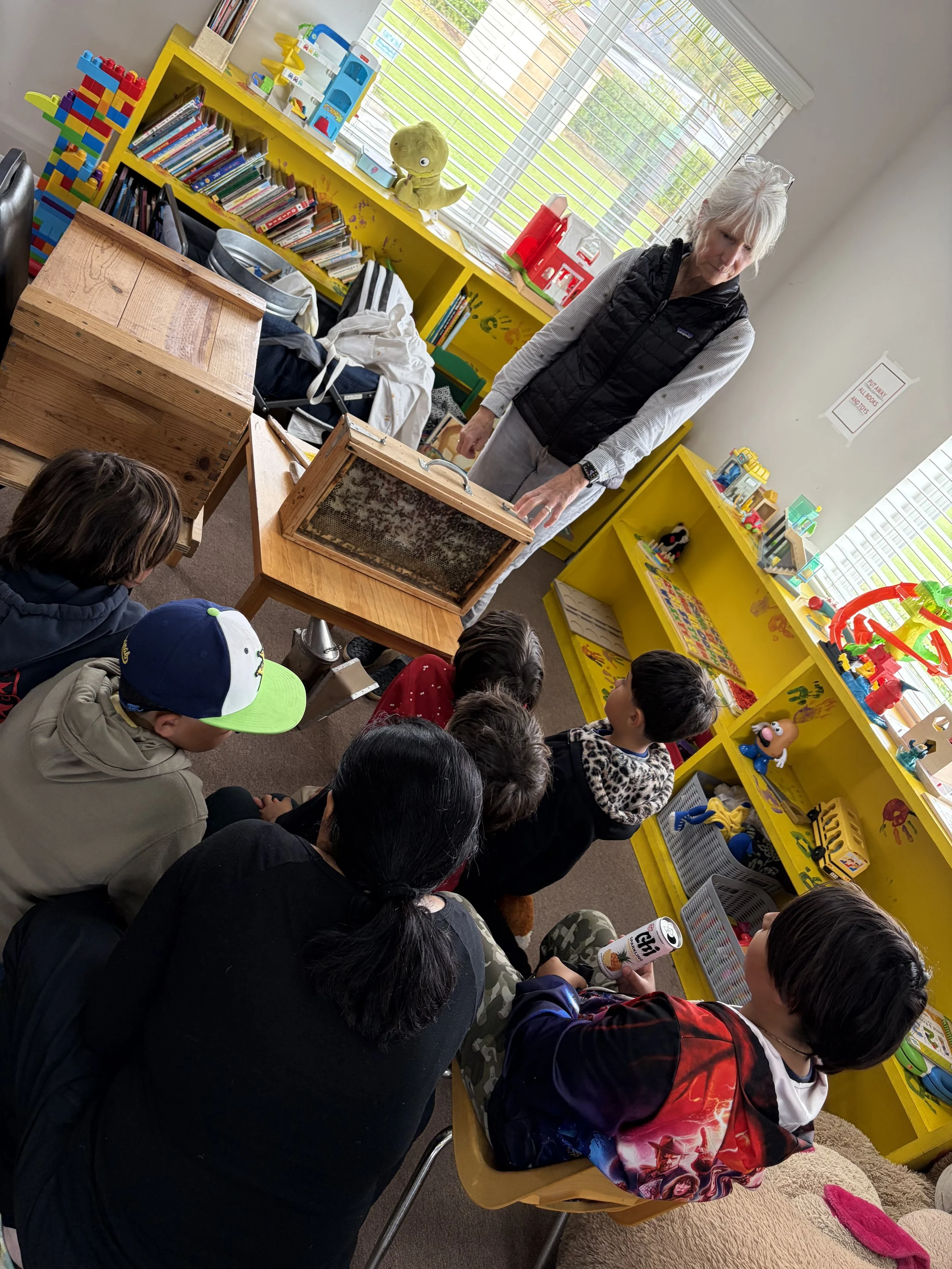
From the moment the hive was set down, curiosity filled the space. Children gathered in close, peering through the glass to watch hundreds of bees moving together across the honeycomb. There was an immediate sense of wonder as they noticed the constant movement, the organization, and the quiet rhythm of the colony at work. Questions came quickly and naturally. What are they doing? How do they know where to go? How does it all work together?
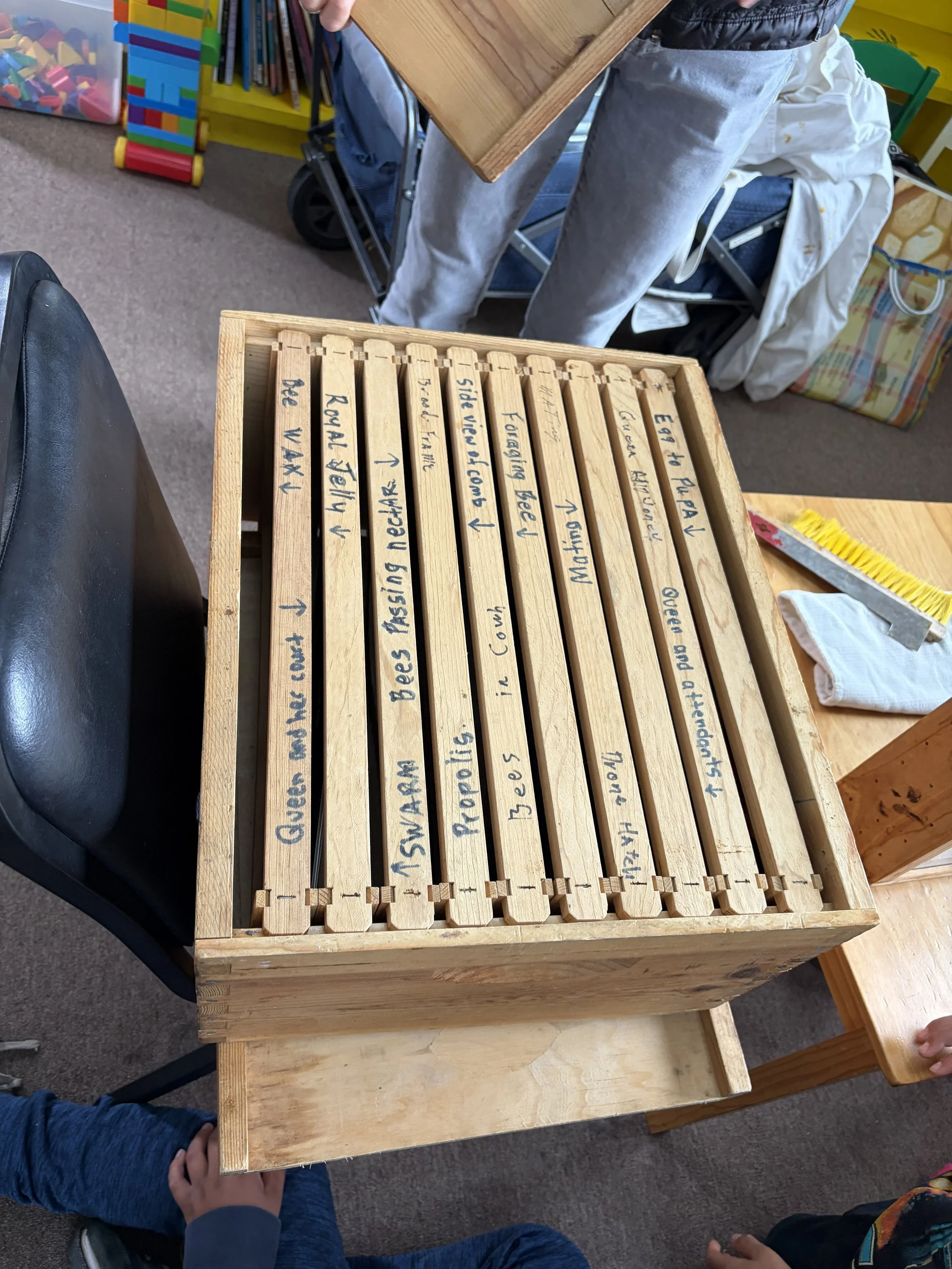
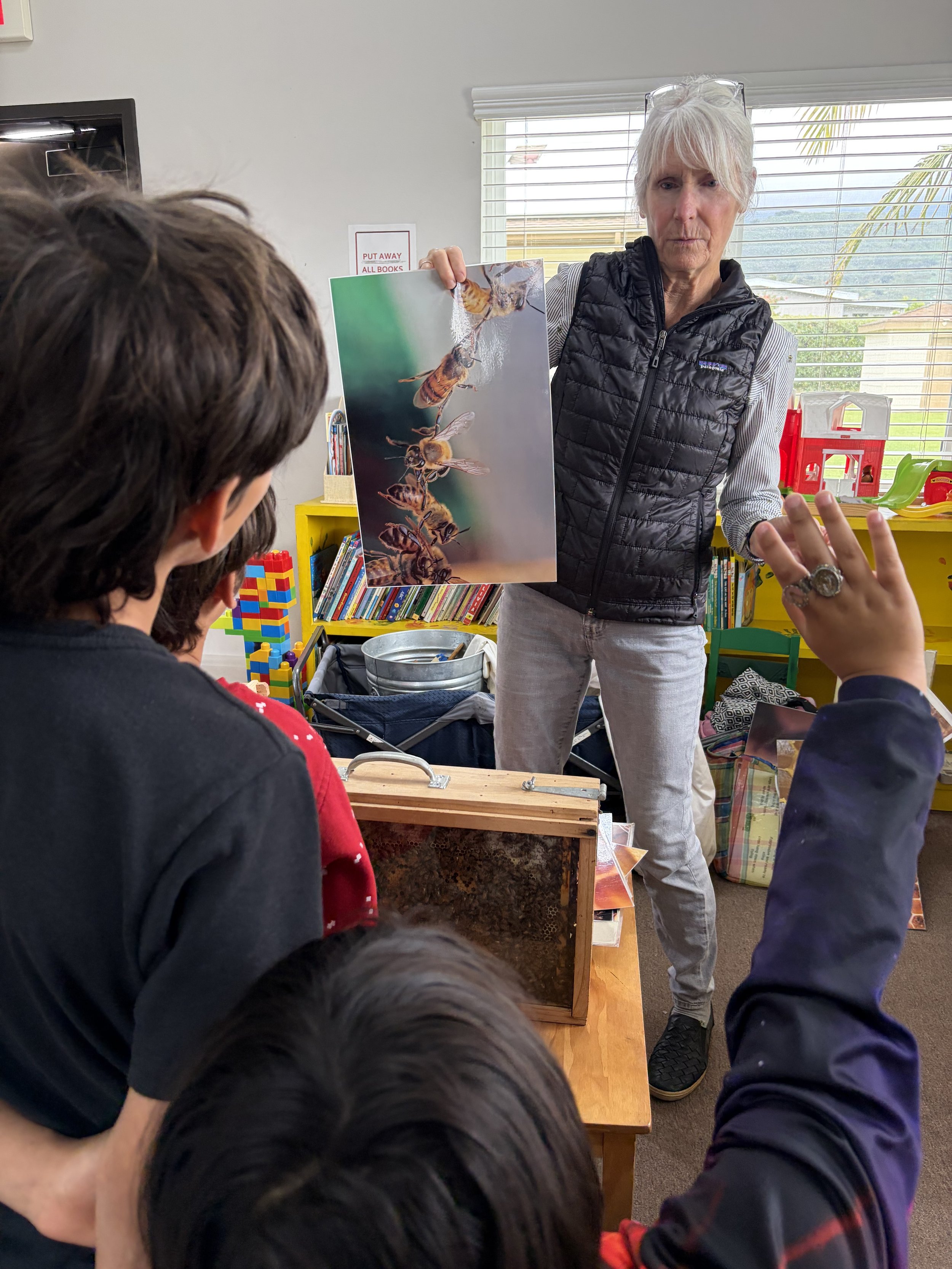
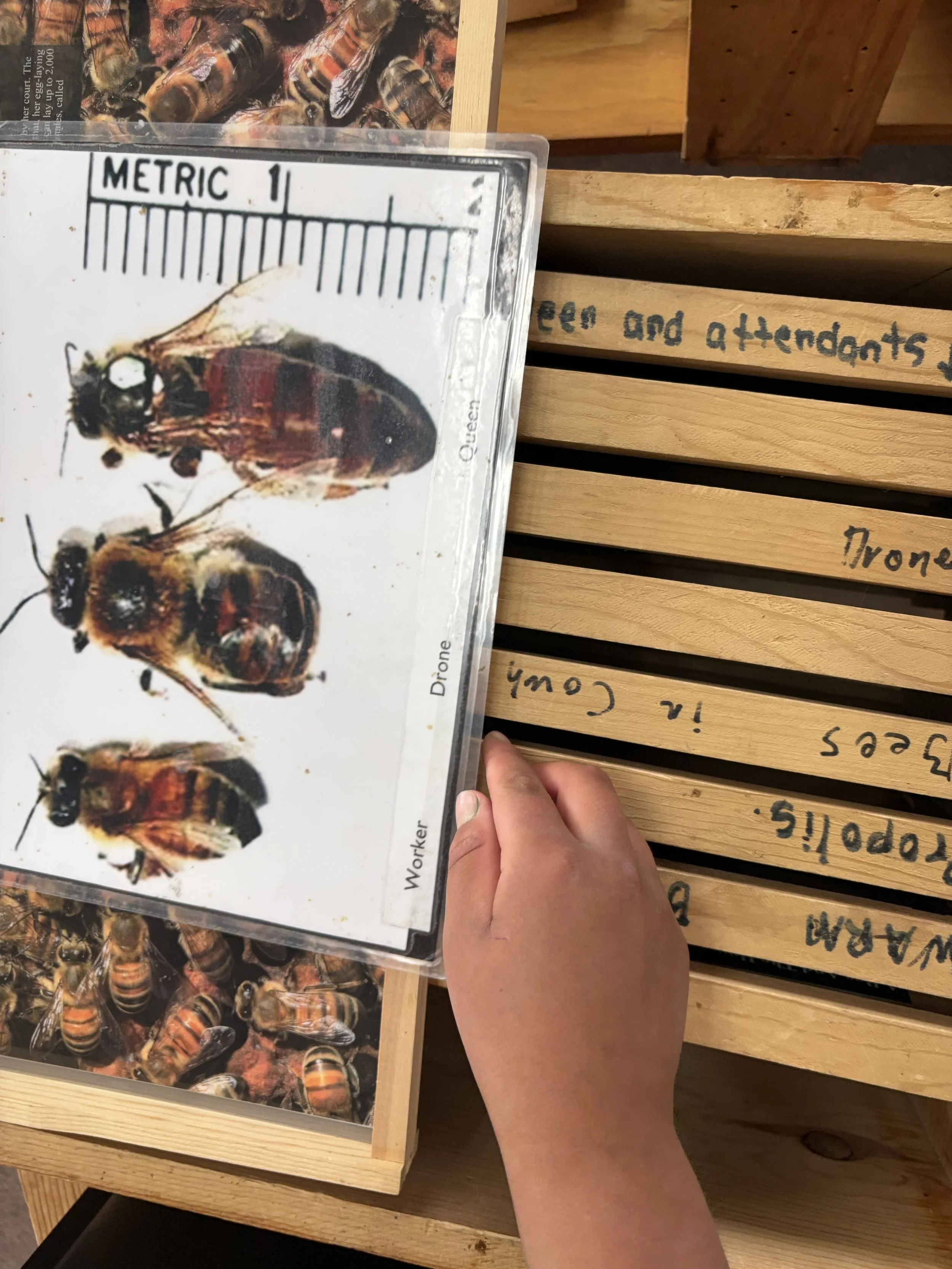
Barbara guided the learners through what they were seeing, explaining the roles within the hive, how bees communicate, and how each one contributes to the life of the colony. The children were especially drawn to the structure of the honeycomb and the purposeful, coordinated movement of the bees as they worked together.
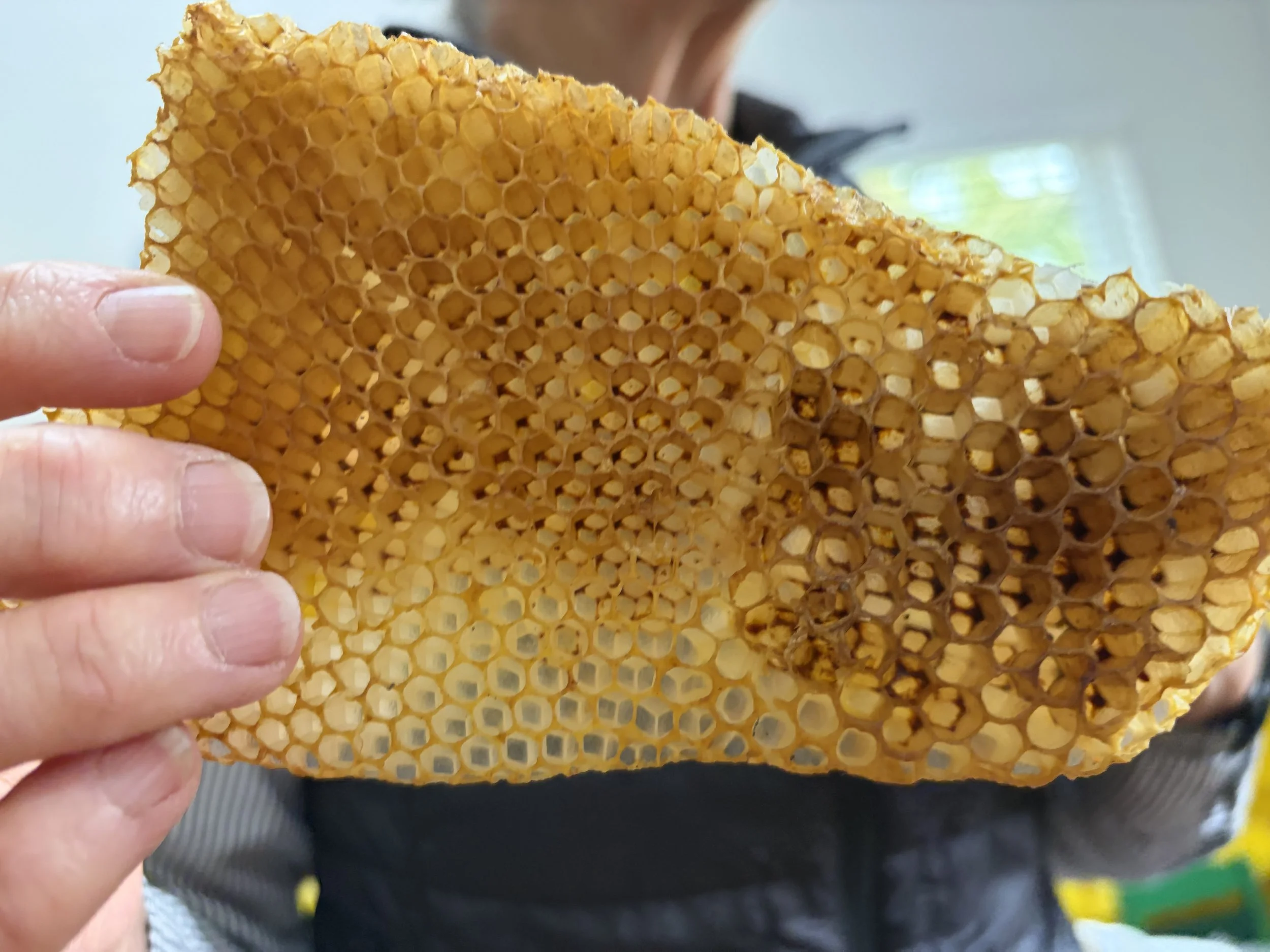
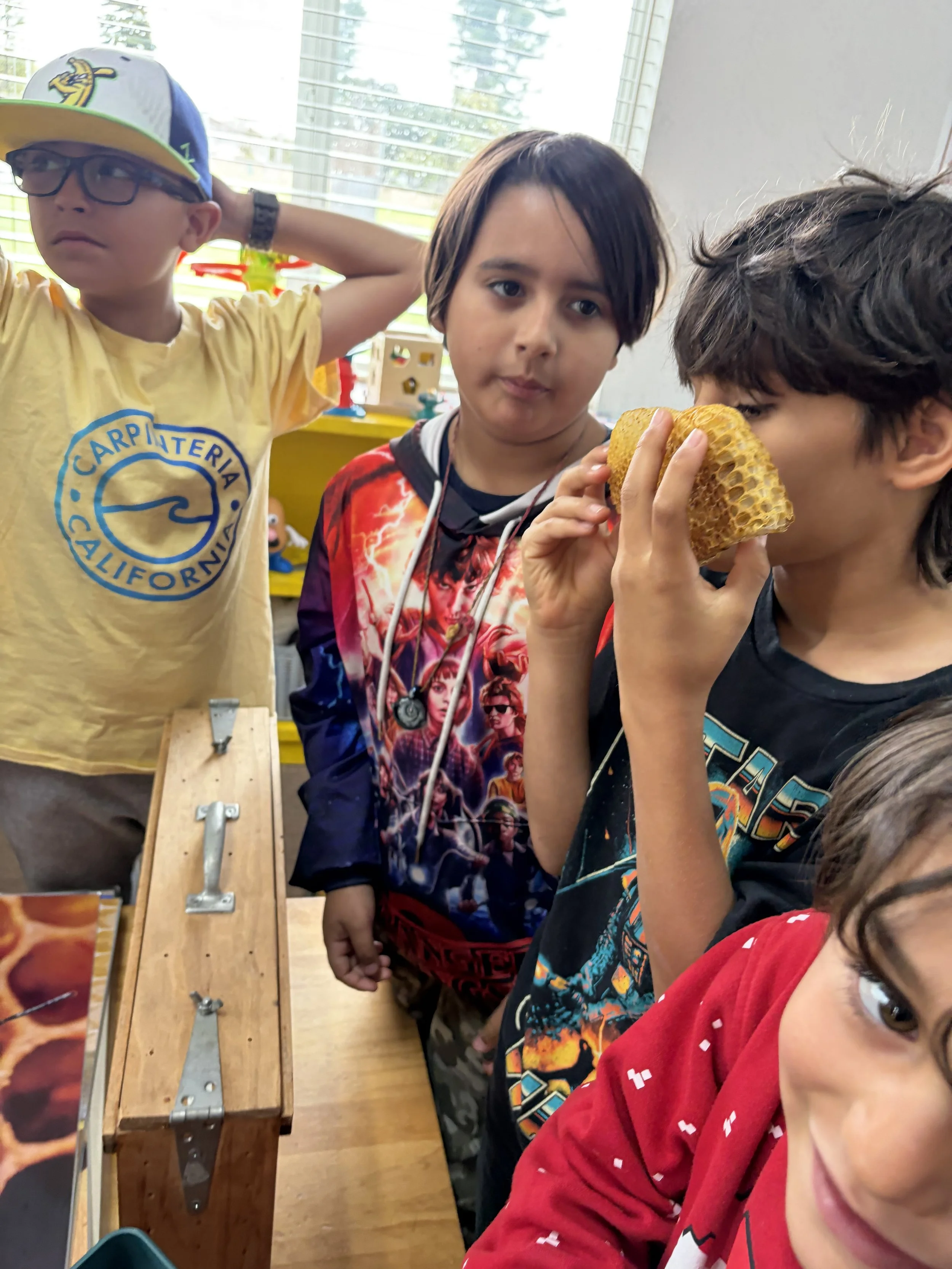
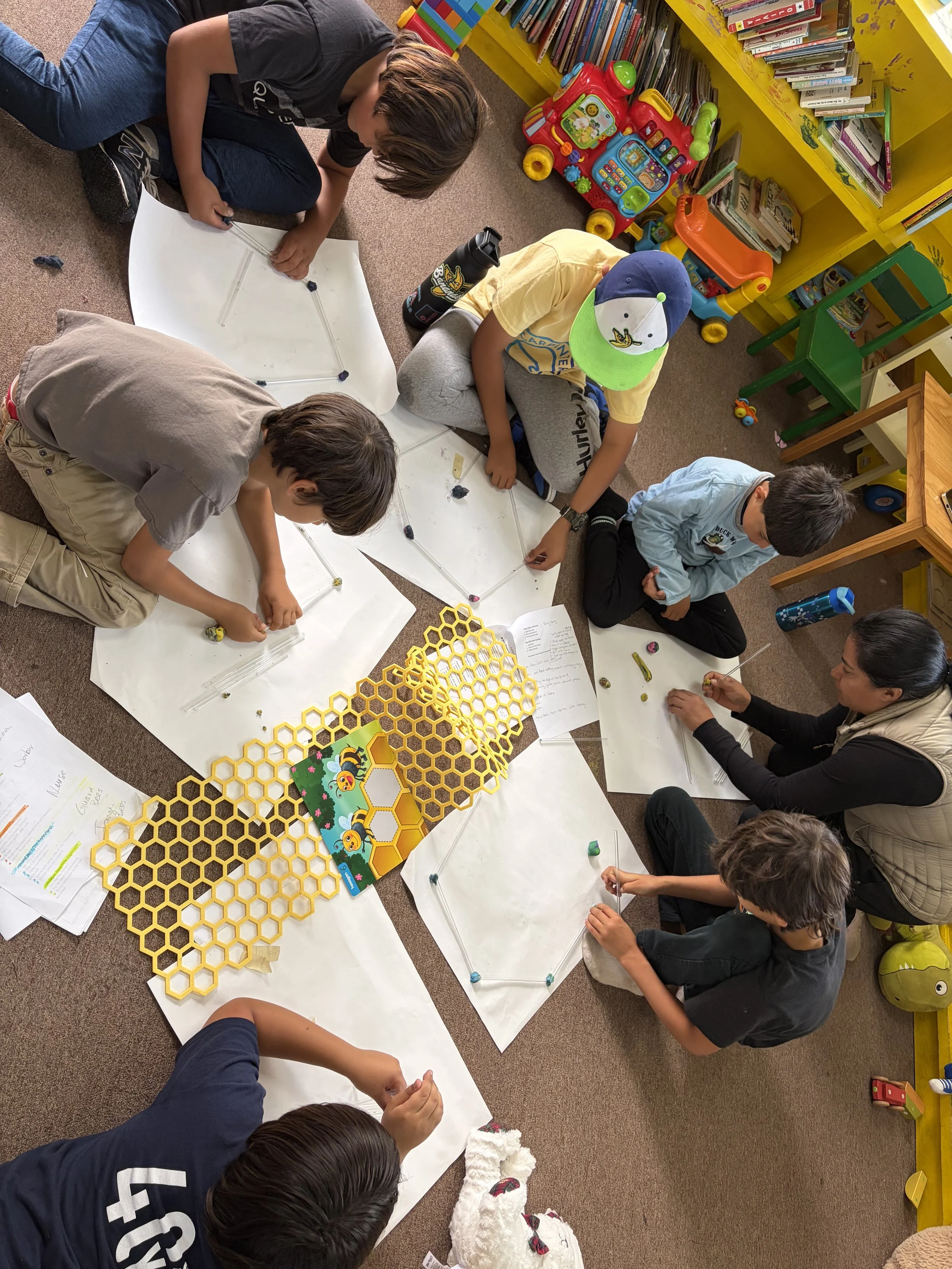
From there, the learning deepened as we explored the structure of the hive itself. Holding and examining pieces of honeycomb, learners noticed the repeating hexagon pattern, strong, efficient, and beautifully consistent. We talked about how bees build these structures and why this shape allows them to store honey and raise their young so effectively. It became a moment where math, nature, and design came together in a very real and tangible way.
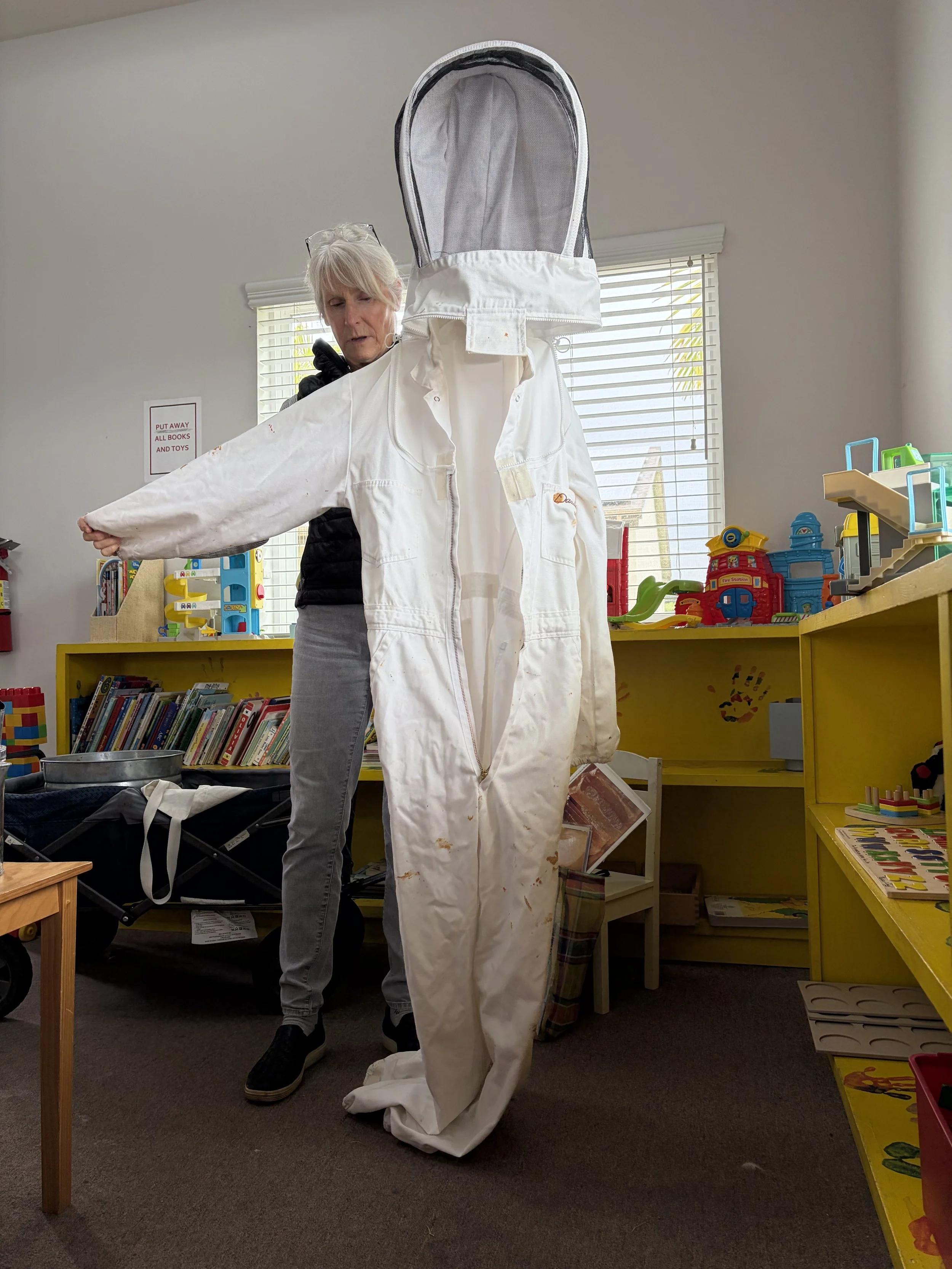
Barbara also introduced the tools of a beekeeper’s trade. The children examined a smoker, brushes, hive boxes, and even a full beekeeper suit and gloves. Seeing the suit up close sparked plenty of questions and a few laughs as they imagined what it might feel like to step into the role of a beekeeper.
We then widened our lens to explore different types of bees. Through images and discussion, learners were introduced to leafcutter bees, known for cutting perfect circles from leaves, and vibrant green sweat bees shimmering in the sunlight. This opened up conversations about how not all bees live in hives and how each species plays its own role in pollination and the health of our ecosystems.
One of the most eye opening moments came as we explored how bees see the world. Side by side images showed how flowers appear to us compared to how they appear to bees. Learners discovered that what looks like a simple flower to us is actually filled with hidden patterns that guide bees directly to nectar. This sparked curiosity and helped them understand that nature often communicates in ways we do not immediately see.
We also had the rare opportunity to gently explore bee anatomy up close. With care and curiosity, learners observed the parts of a bee and began to understand how their bodies are uniquely designed for collecting pollen, flying long distances, and supporting the life of the hive.
Throughout the day, a deeper theme began to take shape. Bees are not just individual insects but part of a highly connected system. Their work supports plants, food systems, and ultimately life as we know it. The idea of cooperation, purpose, and community was not just discussed, it was felt and observed in real time.
One of the highlights of the day was experiencing the products of the hive. The learners observed beeswax and honeycomb up close, noticing the texture, smell, and natural stickiness. These sensory moments brought the learning to life in a way that only direct experience can.
We closed our time together by tasting different kinds of honey, a simple and joyful experience that brought everything full circle. Each jar offered something slightly different in color and flavor, sparking conversation and comparison among the learners. There were wide eyes, thoughtful pauses, and moments of surprise as they discovered how varied honey can be.
In that final experience, the connection became clear. The honey they were tasting was the result of everything they had explored. The bees, the flowers, the hive, and the work.
Through Barbara’s visit, the children gained a deeper understanding of the essential role honeybees play in pollination and in supporting the ecosystems that sustain our food and environment. It was a powerful reminder that even the smallest creatures can have an enormous impact on the world around us.
Days like this remind us how meaningful learning can be when it is experienced directly. When children can see, touch, question, and taste, understanding takes root in a deeper and more lasting way.
We are so grateful to Barbara for sharing her time, knowledge, and passion with our community.
Scroll through the photos above to catch a glimpse of our learners stepping into the fascinating world of bees.